Understanding Artificial Intelligence
through Algorithmic Information Theory
Induction:
A fundamental component of Intelligence
- learn
- recognize situations
- detect new structures
- make appropriate decisions
- and much more.
All humans are mortal.
Socrates is human.
Therefore Socrates is mortal.
Will it rain tonight?

For this, deduction proves insufficient.
How can we extract general rules from limited data?
What symbol should come next? Possible solutions:
- 6: because sequence of integers
- 7: because numbers k such that (7 × 10k + 71)/3 is prime.
- 1: because repetition of the sequence 12345
- 42: because roots of polynomial
x6 – 57x5 + 715x4 – 3795x3 + 9724x2 – 11628x + 5040
Or in other words: continue the sequence
(rain, rain, sun, rain, rain, sun, snow, mist, rain, rain) Classification: Having observed a sequence of pairs (object, label), can I predict the label of a new object?
Or in other words: continue the sequence
(object 1, label 1, object 2, label 2, ... , object n, label n, object n+1)
 Epicurus 341–270 BCPrinciple of multiple explanations:
If more than one theory is consistent with the observations, keep all theories.
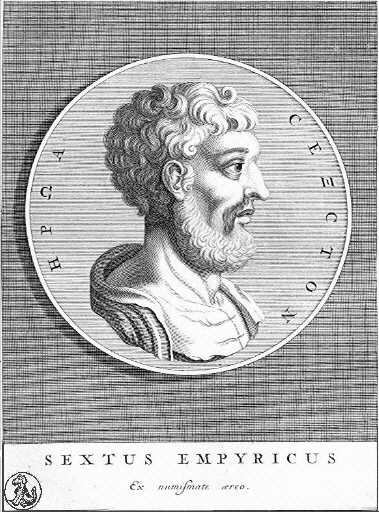 Sextus Empiricus 160-210Validity of inductive reasoning:
‟When proposing to establish the universal from the particulars [...] induction will be insecure, since some of the particulars omitted in the induction may contravene the universal; while if one is to review all, one will be toiling at the impossible, since the particulars are infinite and indefinite.”

|
 |
| "some of the particulars omitted in the | induction may contravene the universal" |

|
 |
 William of Ockham 1287-1347Occam’s Razor Principle:
Entities should not be multiplied beyond necessity
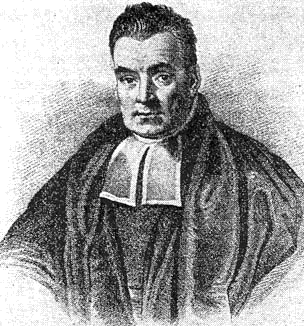 Thomas Bayes 1701-1761Bayes’ Rule:
The probability of hypothesis H being true given some data D is proportional to the learner’s prior belief in H multiplied by the conditional probability of D given H.
- Principle of multiple explanations
- Validity of inductive reasoning
- Occam’s Razor Principle
- Bayes’ Rule
For ages, the problem of induction has been considered to have no general solution...
until 1964, when Ray Solomonoff solved it by creating
the Algorithmic Information Theory framework.